
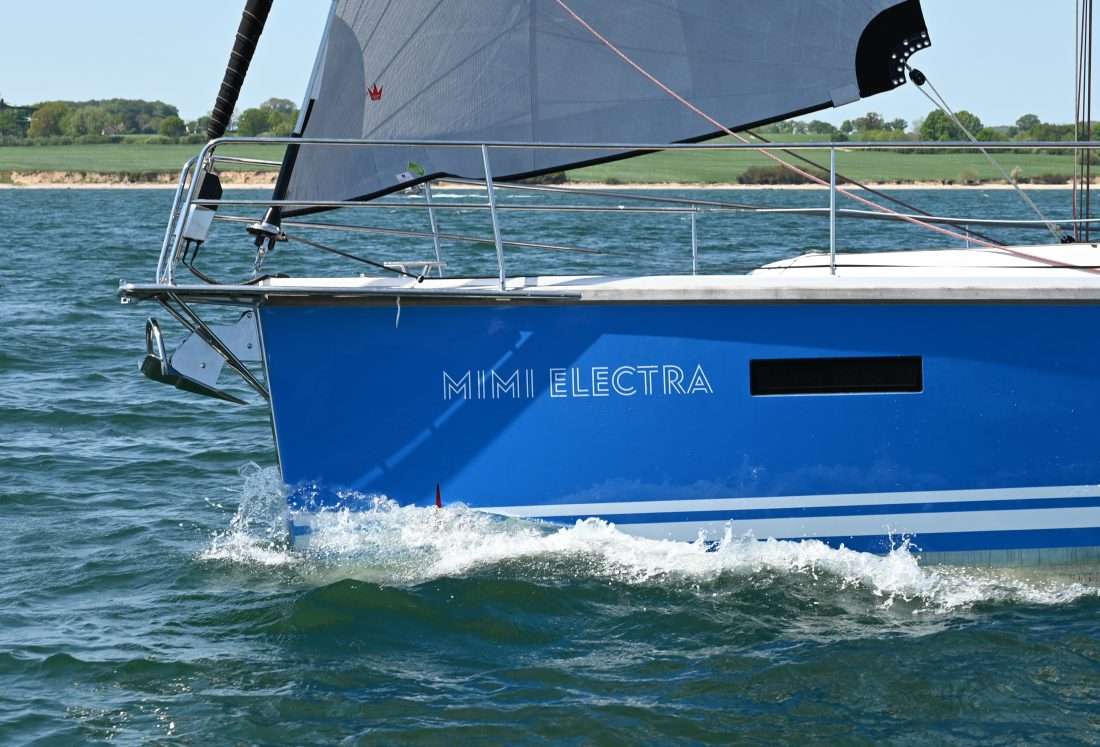
Electromobility is the topic of the decade – so it was only a matter of time before the first customer turned up on our doorstep and ordered a boat with an electric drive from us. After many months of development we are proud to have built a very special Sirius 40 DS. A bluewater-yacht that generates enough energy through recuperation to power itself. But would we recommend such a yacht to any of our customers?
An electric drive in a sailing boat is undoubtedly an innovative propulsion concept that fits in perfectly with modern times. Why start a large diesel engine to move the boat from the jetty into deep water when it only runs for a few minutes? An electric motor is a much better and cleaner alternative. Especially on inland lakes or in coastal waters.

As a dealer of Torqeedo and E-Propulsion outboards, we have been dealing with the topic of electric propulsion for many years and have also configured several boats over the years. However, although electric and hybrid-powered cars have been around for two decades, the systems available on the water sports market were not yet fully developed at that time and were never implemented.
Today there are a large number of new electric drives, some of which are even capable of recuperating electricity and thus charging the batteries while sailing, which opens up completely new possibilities for sailors.
However, there are also applications in which a conventional diesel engine may offer more advantages as an auxiliary engine and may therefore be the better choice.
The advantages of an electric drive
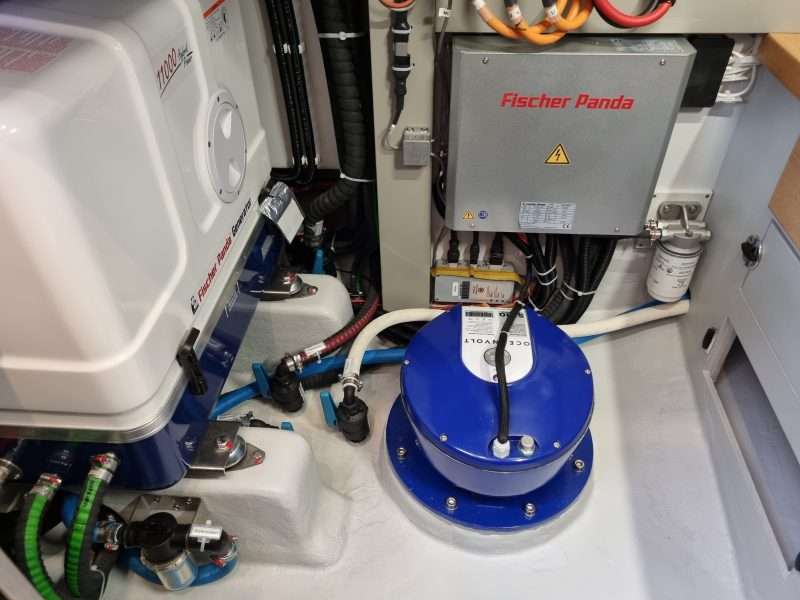
Electric motors are more efficient than diesel engines and, as there is no gearbox, there are also fewer losses in power transmission from the motor via the shaft to the water. If the drive is not supplied solely by the batteries, but a generator is on board as a “range extender”, then it also works more effectively thanks to better speed utilization. As a result, the bottom line is better performance in the “miles per liter of diesel” formula. Under certain circumstances, the installed batteries and the generator can even supply other consumers, such as an air conditioning system or an electric stove and oven, making additional fuels superfluous.
For whom is such an electric drive suitable?
However, the cost of manufacturing and installing all these necessary elements and keeping them permanently available is relatively high. A simple marine diesel engine, which has been tried and tested for many decades, is much simpler. In our opinion, the concept of an electric drive is therefore only worthwhile under special conditions:
For example, if you only use the boat as a daysailor, get by with few motor miles and use the motor mainly for motoring short distances in calms and harbor maneuvers. In this case, the concept can simply be implemented with a drive, a small battery bank and a charger that is plugged into the dock.
Someone who is interested in innovation and wants to own a ship that is state of the art will also enjoy such an electric concept. However, the person must also accept that modern and complex electronics can sometimes cause trouble and cannot be repaired at every location.
The strengths of a diesel engine
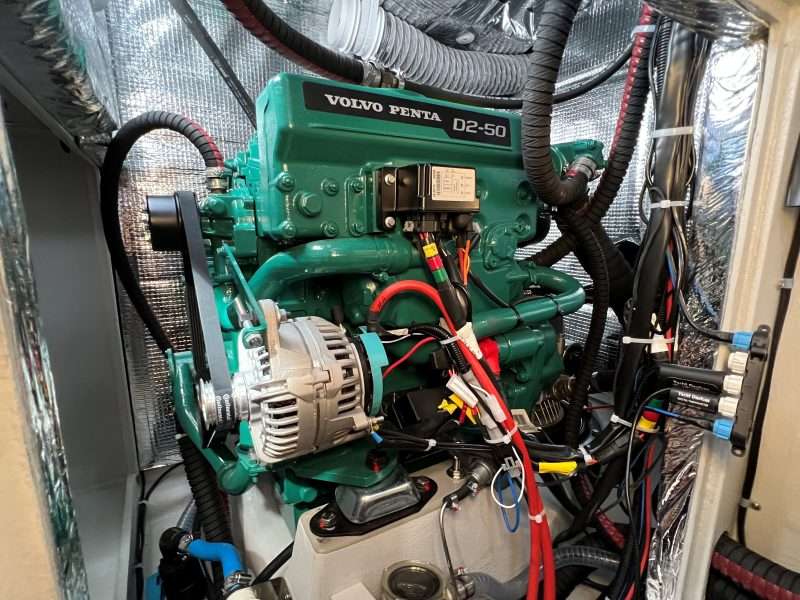
At its core, a marine diesel is often a robust, durable and functionally simple engine, as is often used in construction and agricultural machinery. A reliable system that is not only economical to run, but can also be repaired anywhere in the world. With low consumption and the infrequent use of an engine on a sailing yacht, the diesel engine is also relatively environmentally friendly. If you then fill up with e-fuels and use the diesel engine as rarely as you would with an electric engine, you may even be able to score points with a better eco-balance than with an electric drive and the additional installations associated with it.
Weighing up all the advantages and disadvantages
In the case of electric drives, the necessary electronics and battery technology, it should ultimately also be borne in mind that LiFePO4 batteries and the technology behind them cannot be manufactured without a negative environmental impact and only really move to the positive side of the life cycle assessment if they are used permanently and over a long period of time, such as on an electric ferry or an electric water cab. This is hardly feasible in the leisure sector. Even alternatively generated electricity for “refueling”, such as that available in Schleswig-Holstein and generated from wind energy, is unfortunately only available in very few marinas.
What’s more, a sailing boat is a “hybrid” anyway, in which the sails are the main propulsion system used and preferred by the owners. As a result, the running hours of an electric drive are often very low. In contrast to an electric car, which is used daily and often even for commuting, the balance sheet for sailing yachts therefore does not add up in 99 percent of cases.
If the ship is used on long voyages and the engines are used for recuperation and on a daily basis, the balance sheet can look a little better. However, nothing should break down or suffer other technical defects on long voyages, as solving such problems often requires expert knowledge and working on high-voltage components is also not entirely without danger. The service network for such innovative solutions is also still quite patchy.
In general, you will first have to get used to such a drive system, especially on long journeys, and learn a new way of planning routes in terms of use and range, always allowing for some safety reserves.
Finally, the additional costs for an electric drive solution must also be considered, which can result in a considerably higher price depending on the system, the acceptable restrictions or parallel systems required.
Which drive is the right one for your purpose?
Ultimately, it’s a question of philosophy as to what I expect from the boat and where I want to operate it. For blue water cruises and remote areas, we would always start by asking ourselves how much comfort I can do without, with the aim of keeping the technology robust, simple and reliable. If the air conditioning fails while underway, you can do without it. But if the drive fails, the consequences can be much more serious.
The “Mimi Electra” – the first Sirius 40 DS with electric drive

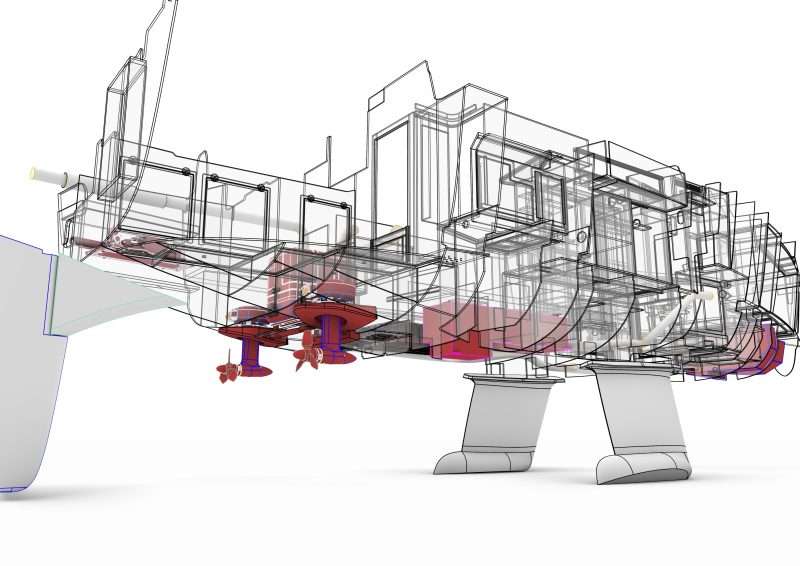
In the case of the concept that has now been implemented, the task was to equip a ship for worldwide travel, in which everything was nevertheless to be operated electrically and almost exclusively via 48 volts. The ship is designed for performance under sail in order to recuperate energy at higher speeds via the two OceanVolt drives. The drives, batteries and generator were therefore chosen at the lower end of the range, as the intention is to sail a lot.
So that the ship is not slowed down too much by the power-generating motors during recuperation, it should sail at the edge of the hull speed, which it cannot overcome anyway. If the motors then recuperate, energy is gained without losing speed. In order to achieve a higher average speed, a lot of weight was saved on the ship and additional, lightweight space sails were purchased.
There is a 17.5 kW LiFePO4 battery bank (48 volts) on board for propulsion and the main consumers, consisting of ten 600A batteries. With full batteries (and no comfort consumers switched on), the boat has a range of around 20 nautical miles at five knots according to OceanVolt’s calculations. However, this of course also depends on the swell and current. Depending on the conditions, the range can then shrink to 15 nautical miles or even increase to 25 nautical miles. At a speed of 3.5 knots, the calculated range is between 30 and 45 nautical miles.

If the 11 kW generator is added, the range increases accordingly. The generator and batteries on this ship are not designed to permanently produce enough electricity for any number of miles at normal cruising speed. Rather, it is a range extender, because the project was also about environmentally friendly transportation. Other designs would of course be possible.
With this configuration this yacht has been precisely tailored to the owner’s wishes and meets his expectations of minimizing his ecological footprint – at least while sailing.
It goes without saying that this ship is not an electric concept that is equally suitable for all sailors, but must always be tailored specifically to the owner. While considerung all pros and cons for many owners a diesel engine may even end up being a much more practical solution.
It is our task to support you with our experience from over 50 years of yacht building, to illuminate all possible options with you and to accompany you on your way to your dream boat.
Do you have any questions – or would you like to talk with us about your dreamyacht? Then please get in touch with us.
